Search Alaska Arrest Records
Alaska arrest records are handled through a mix of state and local agencies spread across the 49th state. The Alaska State Troopers, city police, and the Alaska Court System all keep pieces of the record trail. You can look up arrest records in Alaska by name, case number, or booking number. Start with the statewide CourtView case search or file a request through the DPS public records portal. This page walks you through each option for Alaska arrest records.
Search Public Records
Sponsored Results
Alaska Arrest Records Overview
30
Boroughs & Census Areas
$20
Name Background Check
10
Day Response Window
AS 40.25
Public Records Act
Where to Find Alaska Arrest Records
Alaska is not like most states. There are no county sheriffs here. Instead, the Alaska Department of Public Safety runs the Criminal Records and Identification Bureau out of 5700 East Tudor Road in Anchorage, and the Alaska State Troopers provide rural law enforcement statewide. Most arrest records in Alaska start at one of those two places. Inside city limits, the local police department keeps its own set of reports, mugshots, and booking logs. Once a case moves to court, the Alaska Court System takes over the record.
The DPS Criminal Records and Identification Bureau is the central clearinghouse for criminal history in Alaska. The bureau runs the Alaska Public Safety Information Network, known as ASPIN. ASPIN holds rap sheets, booking files, and disposition info for people arrested anywhere in the state. You can get a name-based check for $20 or a fingerprint check for $35. Each extra copy is $5. Payment must be cash, check, or money order.
The Alaska State Archives in Juneau holds older criminal files that are no longer active. The Archives are helpful for genealogy work and old case research. Below is a shot of the state archive landing page, linked from the Alaska State Archives site.
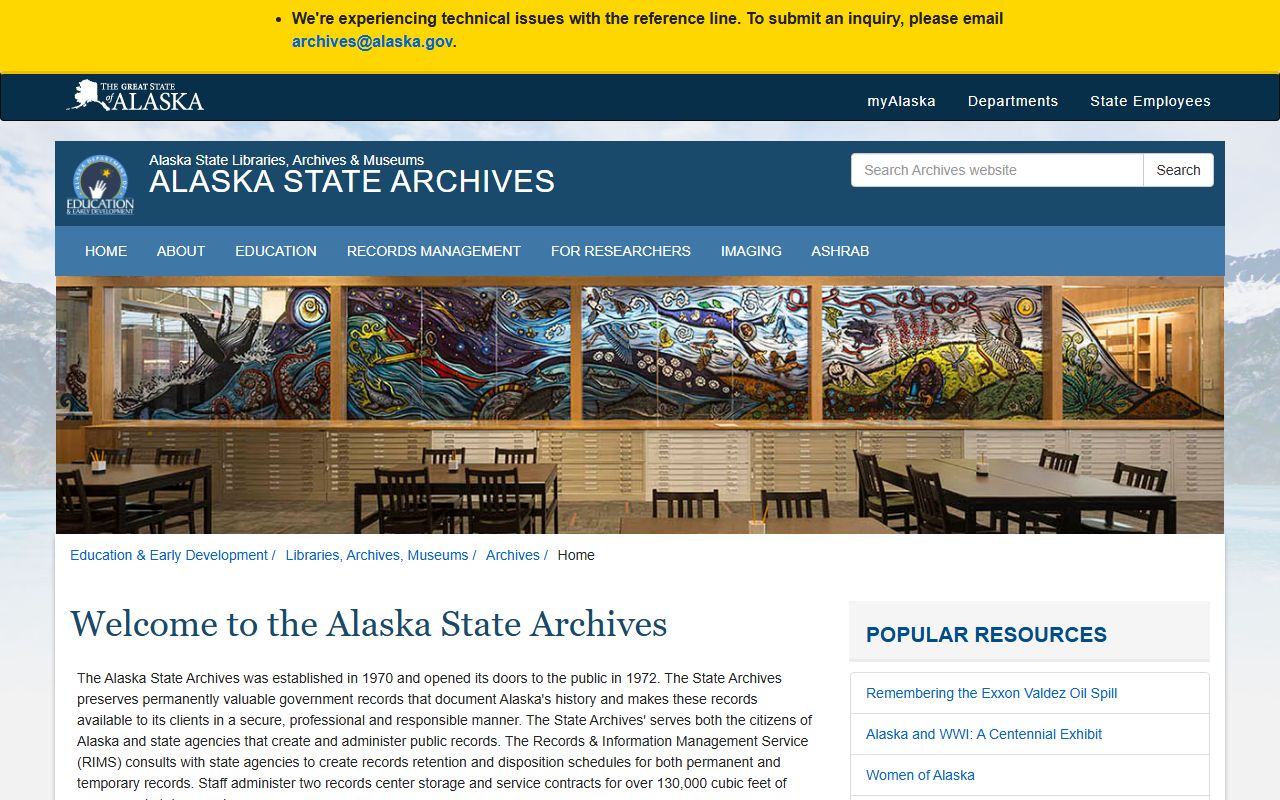
The Archives team can pull court files, trooper logs, and prison records that the active agencies have rotated out of daily use.
Note: Alaska has no sheriffs. Rural arrest records live with the Alaska State Troopers, while city arrests stay with the local police department.
CourtView Alaska Arrest Records
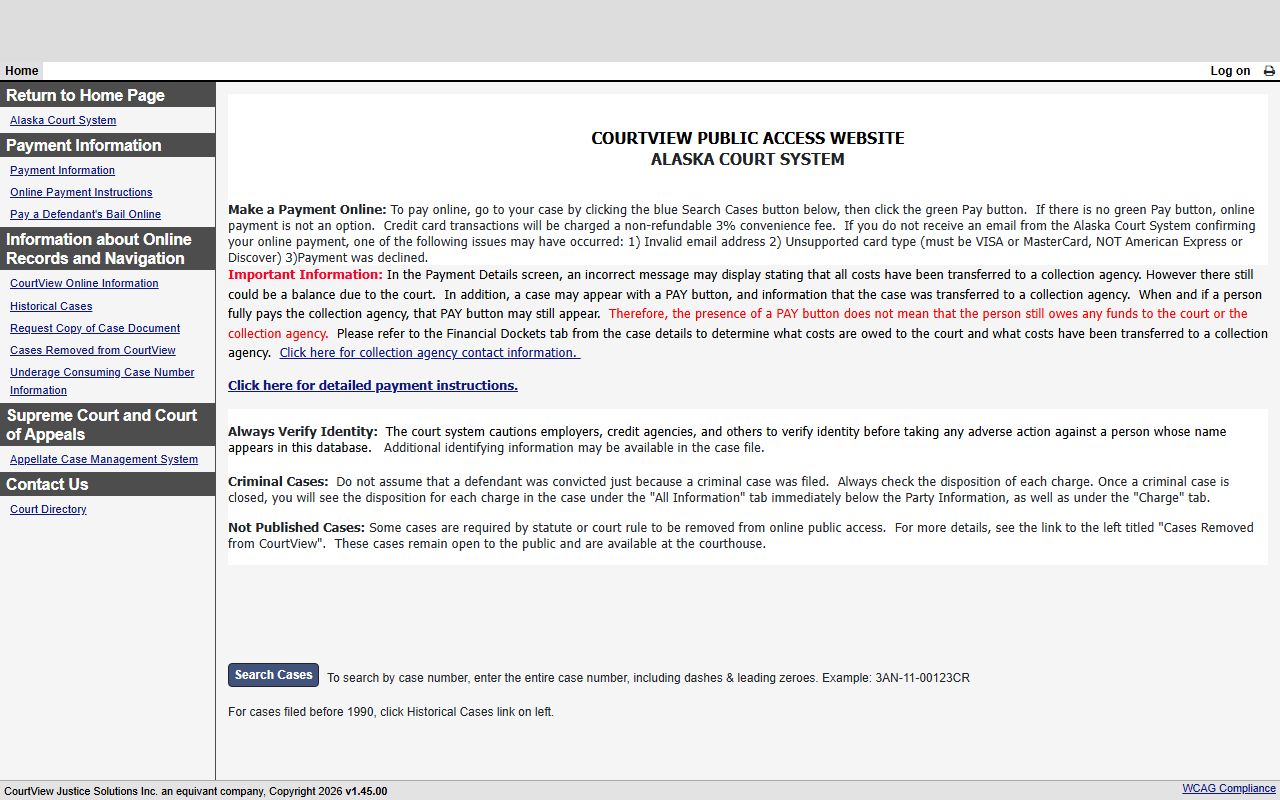
CourtView is the free, statewide case search portal run by the Alaska Court System. It shows criminal cases, civil cases, traffic tickets, small claims, probate, and family cases. Search by party name, case number, or citation. You can see charges, next hearing dates, and docket entries for most cases filed in a Superior or District Court.
CourtView is the fastest way to confirm whether an arrest in Alaska turned into a filed case. The system is online 24/7. It does not post booking photos, and it will not give you the full police report, but it does show the charging language and case status. Screenshot below from the CourtView case search.
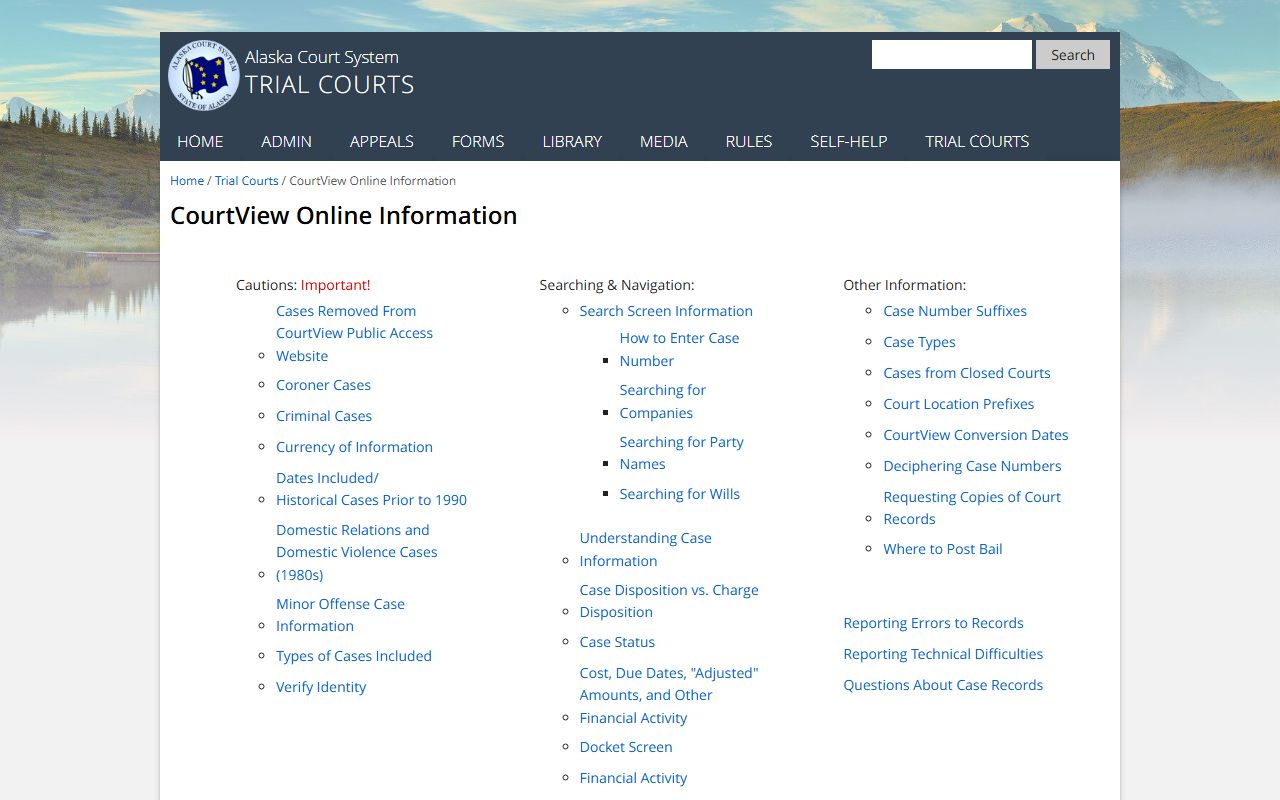
If you need help using the tool, the court system posts user tips and search tricks on its CourtView help page.
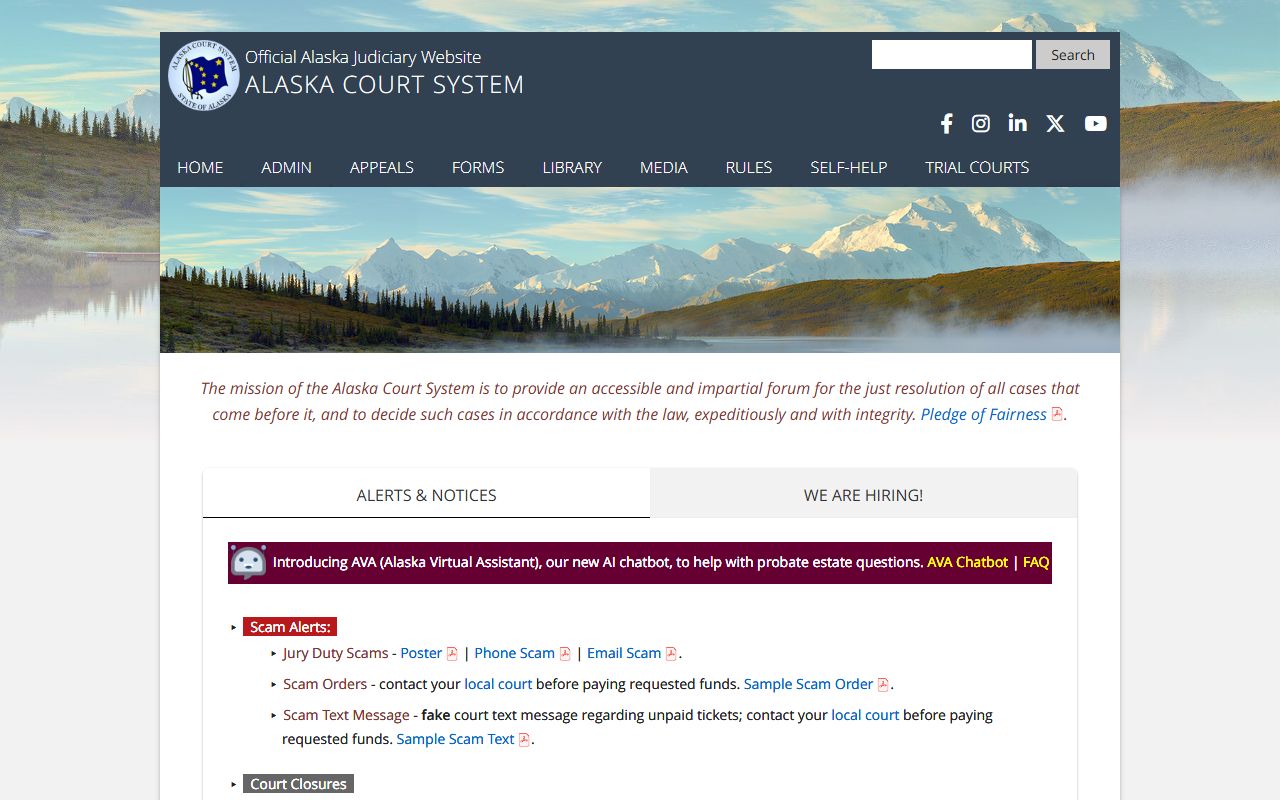
The Alaska Court System homepage is another good starting point, since it links out to trial court directories, forms, and self-help info. You can reach it through the Alaska Court System site.
Court copy fees are set at $5 for the first document and $3 for each added document. Certified copies cost $10 for the first, then $3 more. These fees apply to most court records in the state.
Alaska State Troopers Records
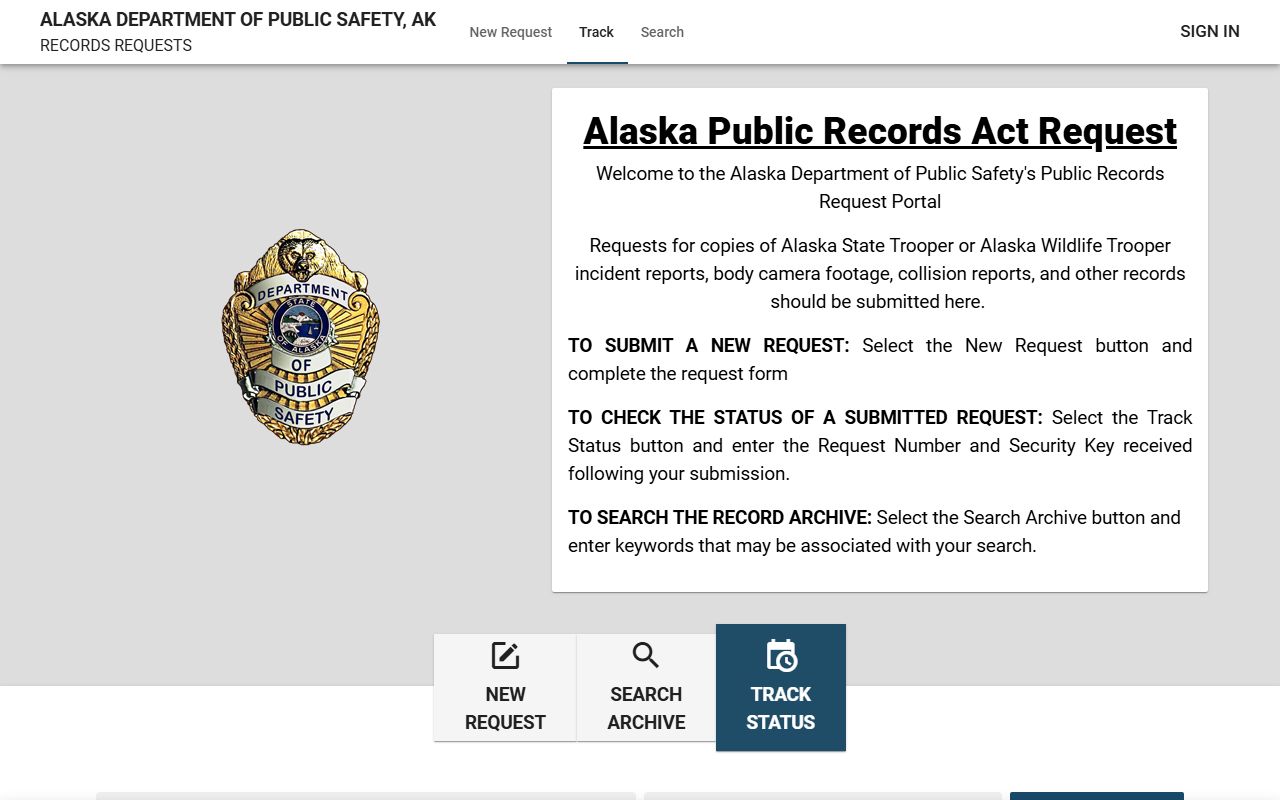
The Alaska State Troopers run the day-to-day law work for almost every census area outside city limits. Trooper posts are spread from Ketchikan in the southeast to Utqiagvik on the North Slope. Each post keeps its own incident reports, arrest logs, and use-of-force files. To get a trooper record, you file a formal request through the DPS online portal.
The DPS public records portal is the one-stop tool for this. You create a free account, then pick the record type, the post, and the incident date. Include party names, rough time of day, and a case number if you have one. A small screenshot of the portal sits below.
Response time is tied to the Alaska Public Records Act. State agencies have 10 business days to reply under AS 40.25.110. Complex files may get a 10-day extension. The Department of Law APRA page lays out the rules.
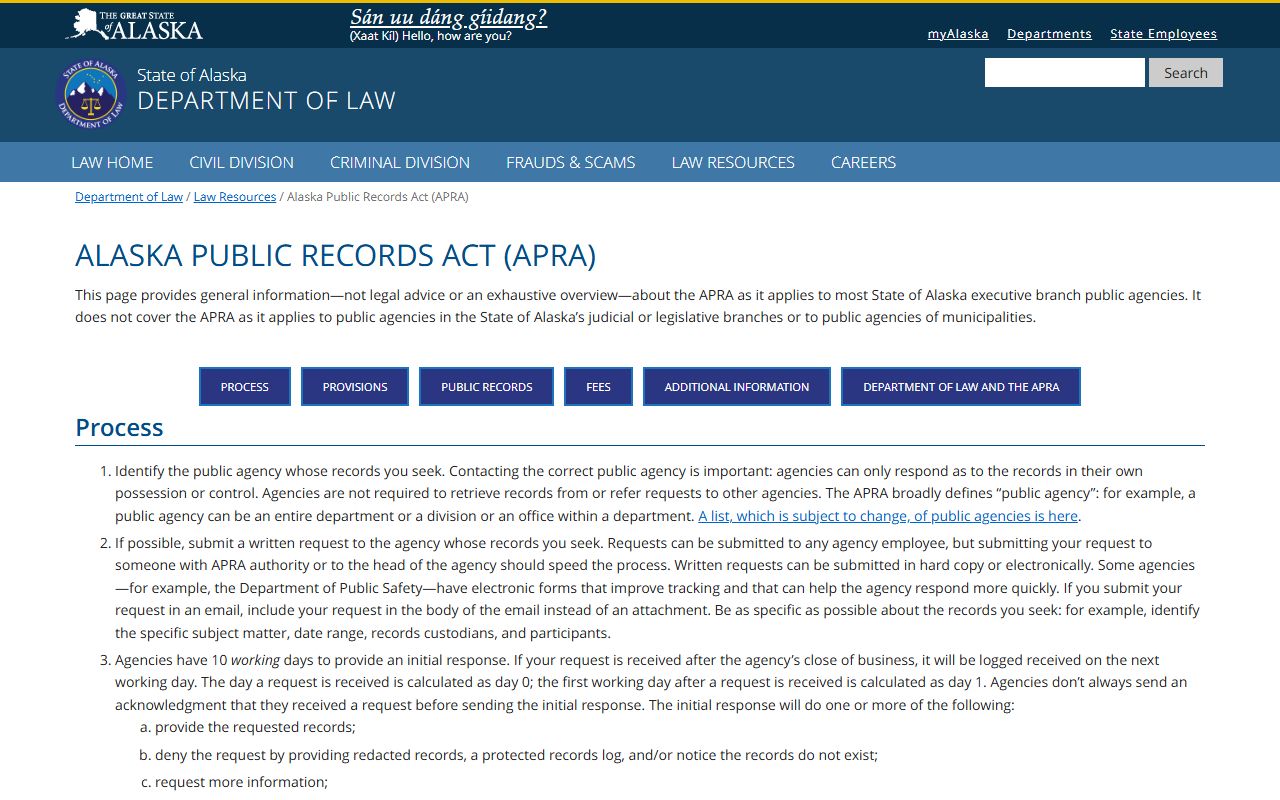
Note: AS 40.25.120 lists the reasons an agency can hold back records, like open cases, juvenile files, and privacy concerns.
Alaska Background Checks
The DPS Criminal Records and Identification Bureau runs the state background check program. A name check costs $20. A fingerprint check costs $35. Each added copy is $5. You can pay in cash, by check, or with a money order. Credit cards are not accepted for mail-in work.
The fastest way to start is the DPS self-service background check portal. You fill out the form, upload your ID, and submit the request online. A look at the portal is below.
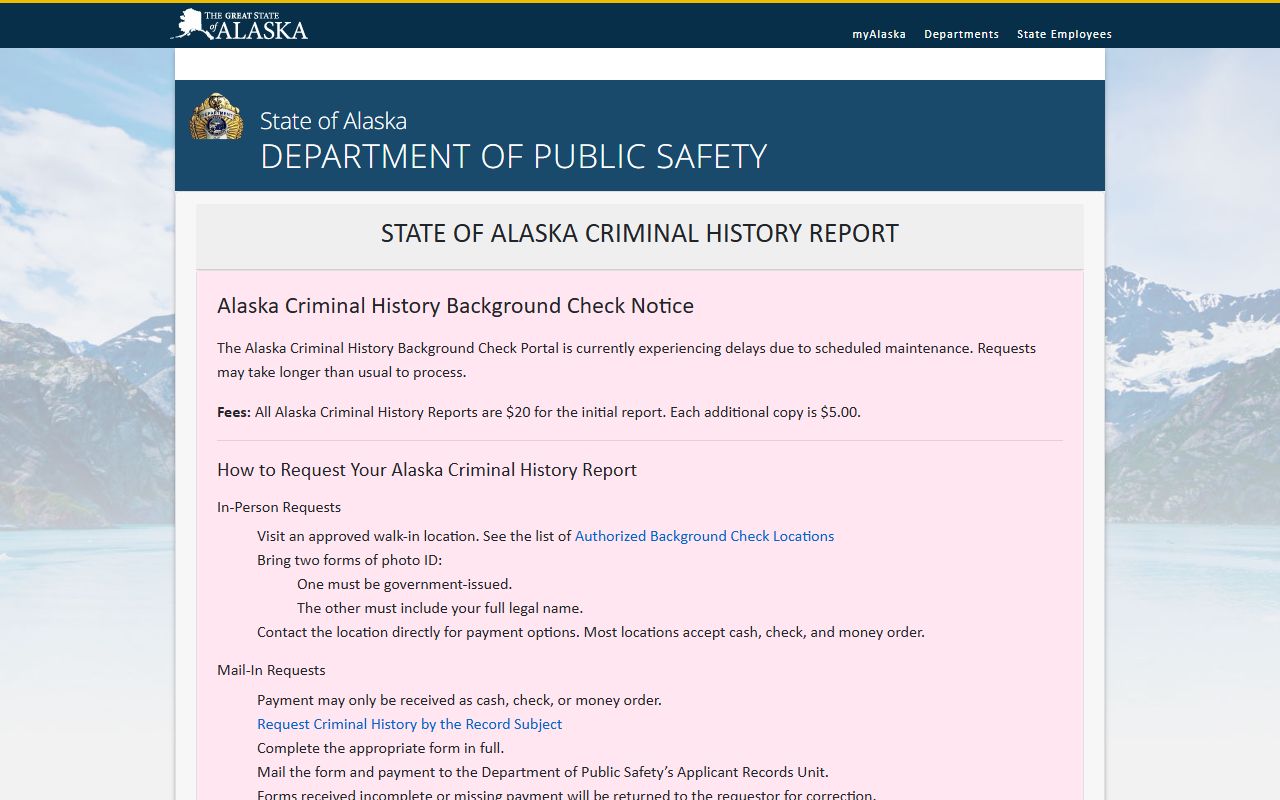
For a walk-in check, bring two forms of photo ID. One must be government issued. The bureau office is open 8:15 a.m. to 4:00 p.m., Monday through Friday. Staff can also run third-party checks if the record subject signs the consent form and the Unsworn Falsification Statement.
You can read more on AS 12.62.160, which governs who can access criminal history files in Alaska, along with AS 12.62.900, which defines criminal identification data and current offender info.
Local Police in Alaska
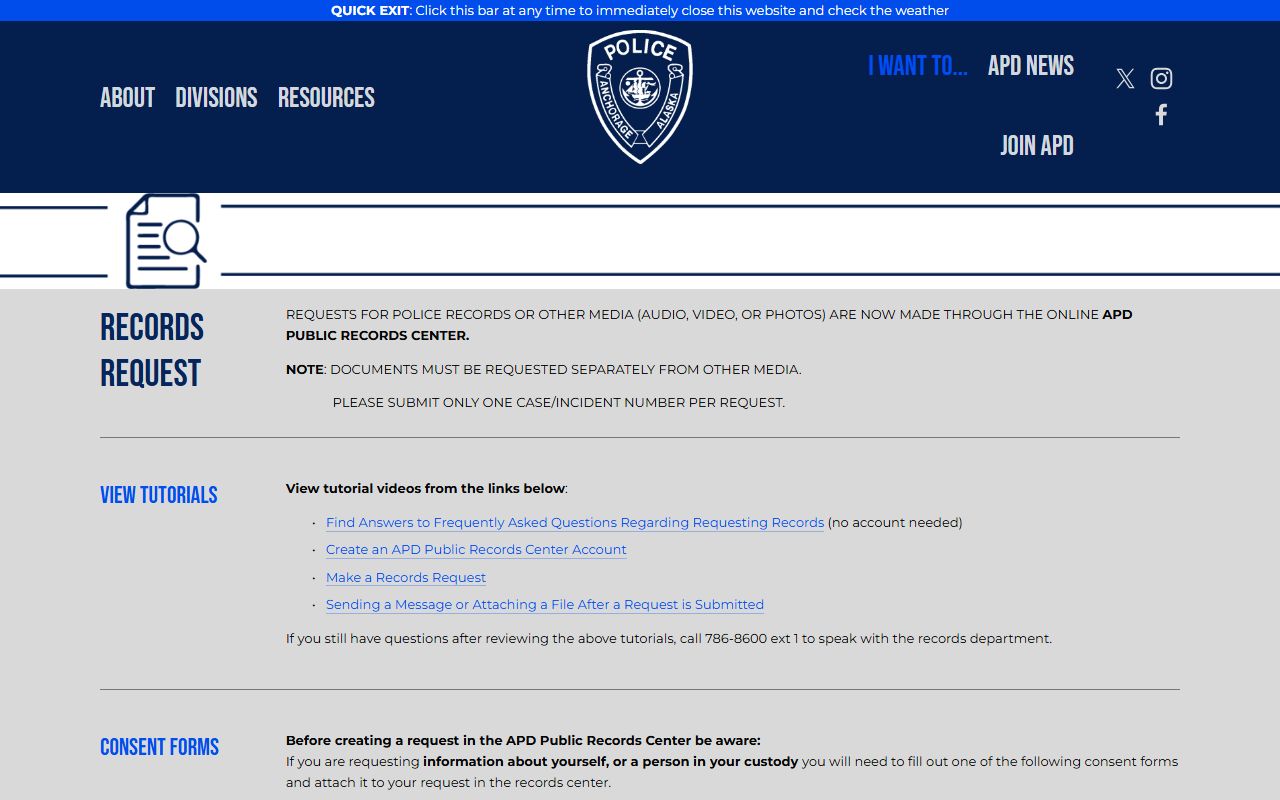
City police departments keep their own arrest records. The Anchorage Police Department runs a detailed online request system through its APD Public Records Center. APD took 3,583 non-aggravated assault reports and logged 1,974 aggravated assault arrests in a recent year, among many other charges. A view of the request page is below.
Other city departments follow a similar model. Fairbanks Police on Cushman Street made 1,127 arrests in 2022. The Juneau Police Department at 6255 Alaway Avenue logged 1,465 arrests the same year. Kenai Police made 459 adult arrests. Homer Police handled 270. Each of these agencies takes written requests for reports, and most publish a fee schedule. Call the records division before sending a check so you know the exact cost.
Some city records come with extra steps. The Palmer Police Department charges $10 per report, plus $0.35 per page over ten pages. Soldotna Police bill $5 per report for the first four pages, then $0.50 each. North Pole Police charge a flat $25 per report. These fee points are from each agency's own public records form.
Inmate Lookup and Jail Rosters
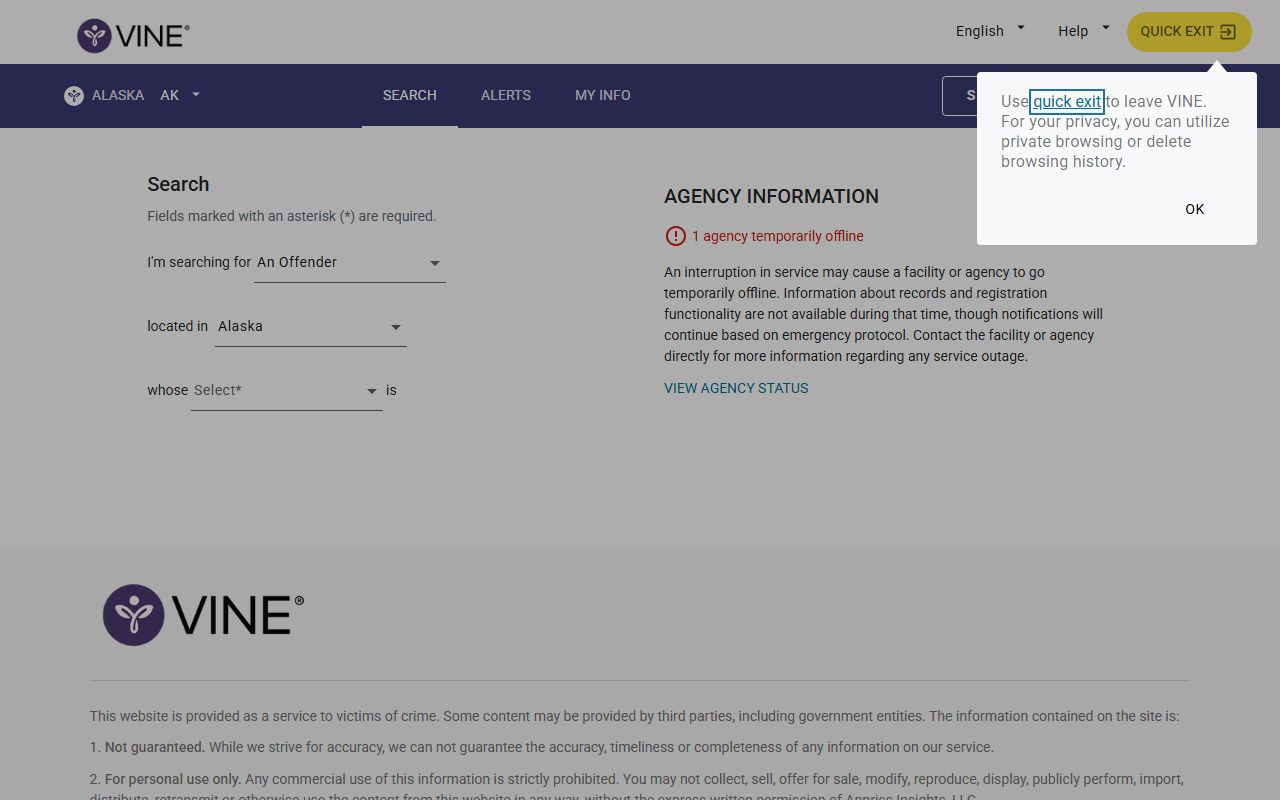
Alaska uses VINElink to post live inmate info from state prisons and regional jails. VINElink is the public face of the VINE notification system, run in tandem with the Alaska Department of Corrections. Search by last name or by offender ID. You can sign up for free alerts when custody status changes.
The tool shows current location, gender, race, and custody type. It does not show mugshots, and it does not include people held only by a city police station. A screenshot of the search page is below.
Major DOC facilities in Alaska include:
- Anchorage Correctional Complex at 1400 East 4th Avenue, Anchorage
- Fairbanks Correctional Center at 1931 Eagan Avenue, Fairbanks
- Lemon Creek Correctional Center at 2000 Lemon Creek Road, Juneau
- Ketchikan Correctional Center at 1201 Schoenbar Road, Ketchikan
- Wildwood Correctional Complex at 10 Chugach Avenue, Kenai
- Mat-Su Pretrial Facility at 339 E. Dogwood Avenue, Palmer
- Yukon-Kuskokwim Correctional Center at 1000 Chief Eddie Hoffman Highway, Bethel
Note: VINElink does not replace a formal records request, but it is the fastest way to check if someone is still in custody in Alaska.
Search Records Now
Sponsored Results
Alaska Arrest Records Laws
The Alaska Public Records Act is codified at AS 40.25.100 through AS 40.25.295. The act opens most government files to the public and says "every person has a right to inspect a public record in the state." Agencies must respond to a written request within 10 business days. AS 40.25.110 covers the mechanics of making a request, and AS 40.25.115 deals with electronic records and data sets. These rules apply to arrest records unless another law blocks release.
The flip side is AS 40.25.120, which lists what can be held back. Open law enforcement files, juvenile records, and files that would put a victim or witness at risk are common exemptions. The Department of Law publishes a plain-English summary on its APRA page to help walk you through the process.
Arrest authority in Alaska comes from AS 12.25.030, which lets a peace officer make a warrantless arrest when there is probable cause. Sex offender registration is set by AS 18.65.087 and AS 12.63.010. Both statutes feed into the public registry run by DPS.
10 Day Rule: Under AS 40.25.110, Alaska agencies must answer a public records request within 10 business days. A second 10 day stretch is allowed if the file needs legal review.
What Alaska Arrest Records Show
A standard Alaska arrest record lists the full legal name of the person, known aliases, date of birth, age, race, sex, height, weight, and any physical marks. The file shows the date, time, and location of the arrest, the arresting agency, and the officer's name or badge number. It also holds the booking number and the charges by Alaska statute cite.
The booking packet adds the mugshot, a ten-print fingerprint set, a property inventory, and a bail or bond amount. Some files list custody status, release date, and the next court date if one has been set. Not every item is public. Social Security numbers and juvenile details are routinely redacted. Files tied to an open investigation may be held until the case closes.
Criminal history reports from DPS add past conviction data, pending cases, and warrant info. Non-conviction entries and sealed records have limited release under AS 12.62.160.
Public Access and Sealed Cases
Most Alaska arrest records are public. Anyone can file a request without giving a reason. Sealed records are the key exception. A judge can seal a file under court rule when privacy or safety concerns outweigh the public interest. Juvenile files are sealed by default and do not show up on CourtView or in a DPS name check.
If an arrest did not lead to charges, the person can ask the court to remove the record from the criminal history through the expungement or correction process laid out by DPS.
Most arrest records in Alaska are open. Juvenile files, sealed cases, and active investigation records are the main exemptions.
Alaska Arrest Records by Region
Each borough and census area has its own set of agencies. Pick a location to see local trooper posts, city police, court info, and jail links for arrest records in that area.
View All Alaska Boroughs
Arrest Records in Major Alaska Cities
Residents of major Alaska cities can look up records at their city police department or the borough trial court. Pick a city below for local contacts and direct links.
View Major Alaska Cities
